-
Tel : 86+19526646869
-
Email : admin@gmarkcn.com
-
Skype : +86-17803901720,86+13100396144


Tel : 86+19526646869
Email : admin@gmarkcn.com
Skype : +86-17803901720,86+13100396144
Industrial rollers play an important role in printing, coating, slitting, rewinding, laminating and other web-processing applications. They are responsible for guiding, conveying, pulling and controlling materials during production.
After long-term operation, however, roller surfaces may experience wear, scratches, slipping, material deviation, wrinkling or adhesive and ink buildup. If these problems are not addressed in time, they can affect product quality, increase maintenance costs and even cause unexpected machine downtime.
So, what should you do when an industrial roller becomes worn? More importantly, how can you protect the roller and extend its service life?
Roller wear is usually caused by a combination of friction, operating conditions, material characteristics and maintenance practices.
Industrial rollers often operate continuously at high speeds. Constant contact between the roller surface and materials such as film, paper, labels and flexible packaging can gradually cause surface wear.
The longer the equipment operates under high-speed conditions, the more important stable surface performance becomes.
When the roller does not provide enough friction, the material may slip during transportation.
Material slipping can lead to:
Repeated slipping can also increase friction between the roller and processed material, accelerating surface wear.
In printing, coating and laminating applications, ink, adhesive and coating materials may gradually accumulate on roller surfaces.
This buildup can make the roller surface uneven and affect material movement. In some applications, it may also cause contamination, scratches or defects on the finished product.
Excessive or uneven material tension can place additional stress on industrial rollers.
Over time, unstable tension combined with continuous friction may contribute to abnormal roller wear and inconsistent material handling.
Dust, adhesive residue, ink and other contaminants can accumulate on roller surfaces if regular cleaning and maintenance are neglected.
Keeping rollers clean is an important part of maintaining stable equipment performance.
Not every roller problem means that the entire roller needs to be replaced. Before choosing a solution, it is important to identify the symptoms.
Common signs of roller wear include:
If these problems occur repeatedly, the roller surface, friction level and cleanliness should be inspected.
Depending on the severity of the problem, several solutions can be considered.
For rollers with severe scratches, deformation or structural damage, refinishing, re-coating or replacing the roller may be necessary.
This approach can restore roller performance, but it may involve higher costs and machine downtime.
For this reason, it is often preferable to prevent minor surface problems from developing into serious damage.
If the main problem is caused by ink, adhesive or other contaminants, regular cleaning may help restore the roller surface.
Keeping the roller clean can improve material contact and reduce problems caused by surface buildup.
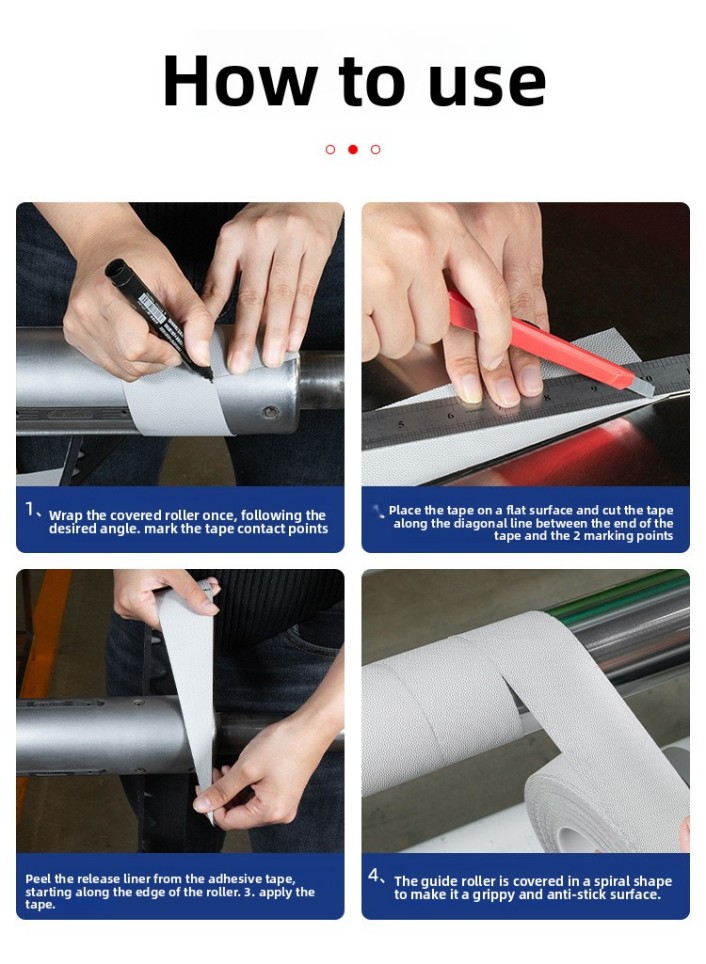
For applications involving surface wear, insufficient friction, material slipping or contamination, roller wrapping tape can provide an alternative solution.
By adding a functional surface layer to the roller, the tape can improve friction and material control while helping protect the original roller surface from direct contact and wear.
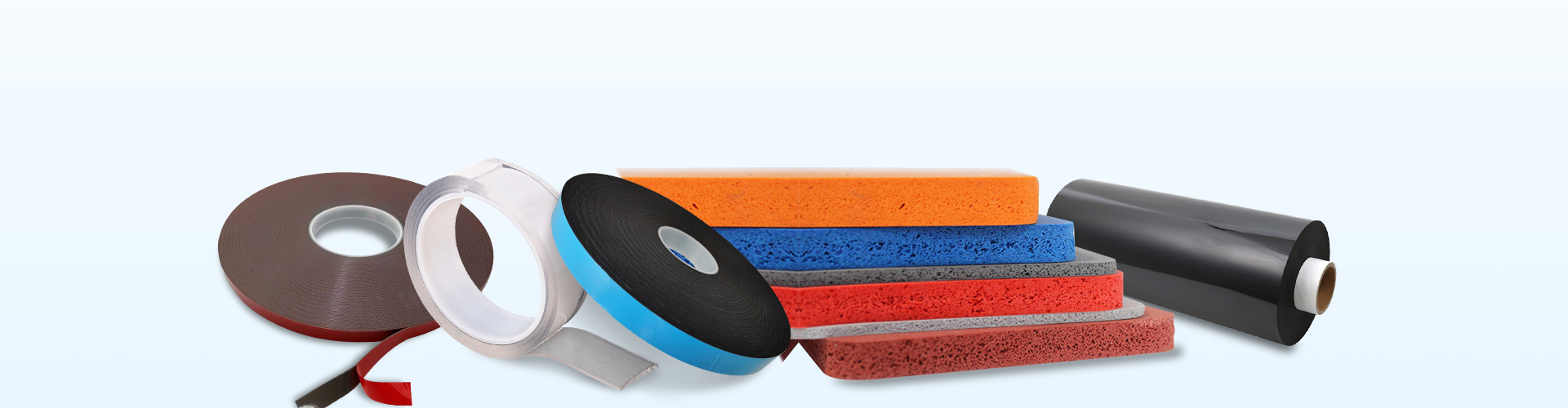
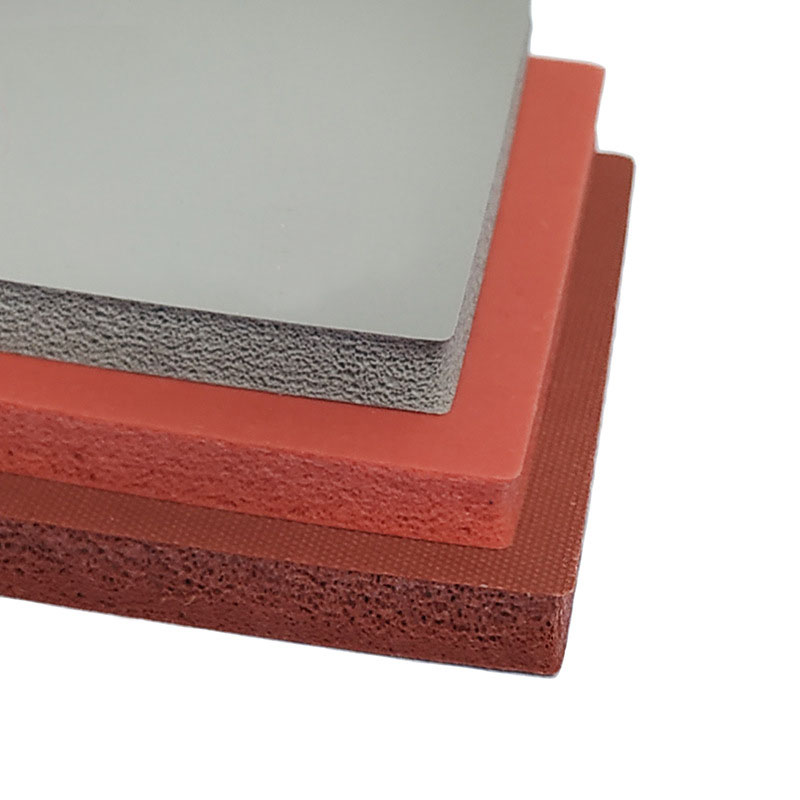
Silicone roller wrapping tape is designed for applications where friction, release performance and stable web handling are important.
Compared with ordinary adhesive tape, industrial roller wrapping tape focuses more on the performance of the working surface.
A high-friction silicone surface can improve contact between the roller and processed material.
This helps reduce material slipping and supports more stable web conveying.
For high-speed printing, coating and converting equipment, stable friction is essential.
Anti-slip roller tape can help maintain better material control and reduce unwanted movement during operation.
When material movement is unstable, wrinkles may occur during processing.
A properly selected roller wrapping tape can improve roller-to-material contact and help support smoother web handling.
Silicone has good release characteristics and can help reduce the adhesion of ink, adhesive and other processing materials.
This makes silicone roller wrapping tape particularly useful for printing, coating and laminating applications.
A roller wrapping tape can provide an additional functional layer between the original roller surface and the processed material.
This can help reduce direct surface contact and support longer service intervals in suitable applications.
Industrial roller wrapping tape can be used in a wide range of web-processing applications.
In printing equipment, roller wrapping tape can help improve material control while reducing ink contamination and material slipping.
For coating lines, a stable roller surface is important for consistent material transportation. The non-stick silicone surface can also help reduce coating buildup.
During slitting operations, stable web movement is essential for accurate processing. High-friction roller tape can help reduce slipping and improve material control.
During rewinding, unstable material movement can result in uneven rolls. Roller wrapping tape can help provide more consistent roller contact.
Laminating equipment often requires stable material transportation and controlled friction. Silicone roller wrapping tape can be used on suitable rollers to support stable web handling.
Different machines and materials require different roller surface properties. Before selecting a roller wrapping tape, consider the following factors:
For high-speed or continuous production, friction stability, wear resistance and surface durability should be carefully considered.
Providing detailed application information can help the tape supplier recommend a more suitable solution.
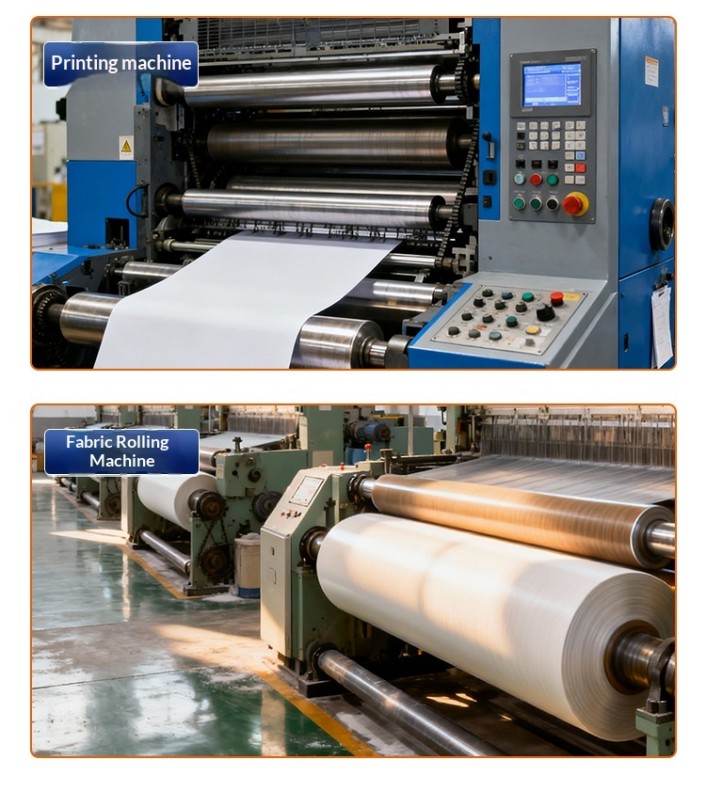
Preventing roller wear is usually more cost-effective than replacing a damaged roller.
Regular maintenance should include:
Regular Inspection
Check the roller surface for scratches, wear, contamination and uneven areas.
Regular Cleaning
Remove adhesive, ink, dust and other contaminants before they accumulate.
Stable Web Tension
Maintain appropriate material tension to reduce unnecessary stress on the roller.
Prevent Material Slipping
Use a suitable high-friction roller surface when slipping is a recurring problem.
Protect the Roller Surface
For suitable applications, roller wrapping tape can provide an additional functional surface and help reduce direct wear.
So, what should you do about roller wear?
If the roller is experiencing minor surface wear, insufficient friction, material slipping or contamination, replacing the entire roller may not always be necessary.
Cleaning, regular maintenance and the use of suitable silicone roller wrapping tape can help improve surface friction, reduce slipping and wrinkling, resist adhesive and ink buildup, and protect the original roller surface.
For printing, coating, slitting, rewinding and laminating applications, stable roller performance is essential for consistent web handling and product quality.
GMARK's Anti-Slip Anti-Wrinkle Roller Wrapping Tape features a high-friction silicone surface designed to support stable material conveying while providing non-stick performance against common contaminants such as ink and adhesive.
If you are experiencing roller wear, material slipping, web wrinkling or roller contamination, contact GMARK with your roller dimensions and application requirements for a suitable roller wrapping solution.
Contact
Wechat: Whatsapp:


Tel:+86 13100396144 Mrs Diana Zhou
E-mail:sales9@gmarktape.com
Contact me for more details and to get a free sample.
Email : admin@gmarkcn.com
Skype : +86-17803901720,86+13100396144
No.7 Liyuan Road, Xuzhen Zone, Zhangmutou Town, Dongguan City, Guangdong, China