-
Tel : 86+19526646869
-
Email : admin@gmarkcn.com
-
Skype : +86-17803901720,86+13100396144


Tel : 86+19526646869
Email : admin@gmarkcn.com
Skype : +86-17803901720,86+13100396144
Silicone foam sheet is a versatile material widely used in industrial manufacturing, automotive components, electronic equipment and protective applications. Known for its flexibility, resilience and temperature resistance, silicone foam provides practical solutions for cushioning, sealing, insulation and equipment protection.
Compared with many conventional foam materials, silicone sponge offers a combination of flexibility and performance in demanding environments. It is available in different densities, hardness levels, thicknesses and colors to meet various application requirements.
But what makes silicone foam sheet a suitable choice for industrial applications? How do you select the right material for your project?
In this guide, GMARK explores the key properties, common applications and important selection factors of silicone foam sheets.
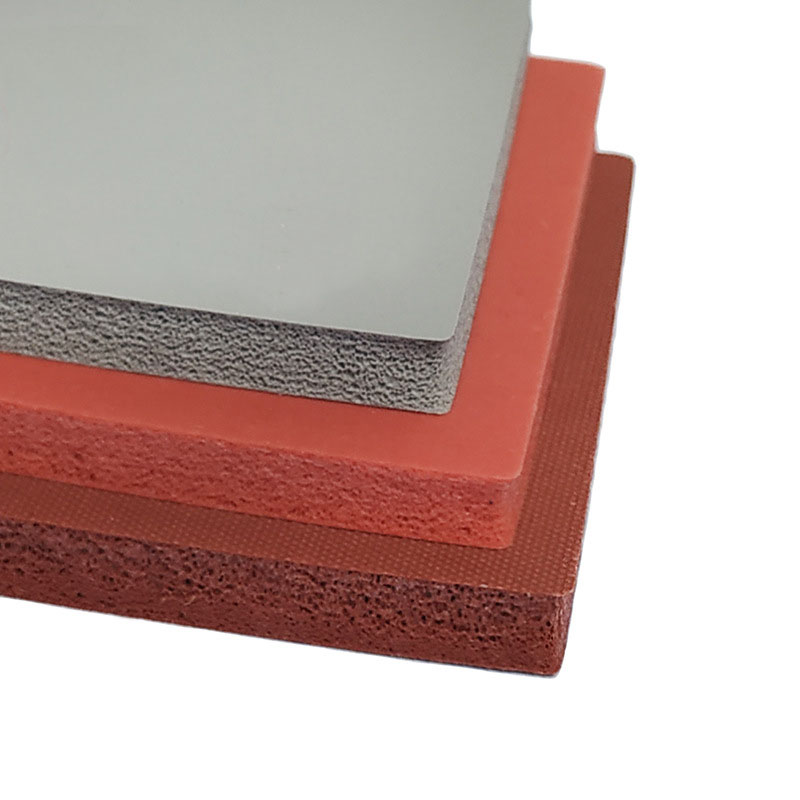
Silicone foam sheet is a cellular material made from silicone rubber through a specialized foaming and curing process. Its internal structure contains numerous small cells, giving the material its lightweight, flexible and cushioning characteristics.
Also known as silicone sponge sheet or silicone foam rubber sheet, this material is designed for applications that require flexibility, compression performance and resistance to environmental conditions.
Depending on the manufacturing process, silicone foam can have different cell structures, densities and mechanical properties.
Common product variations include:
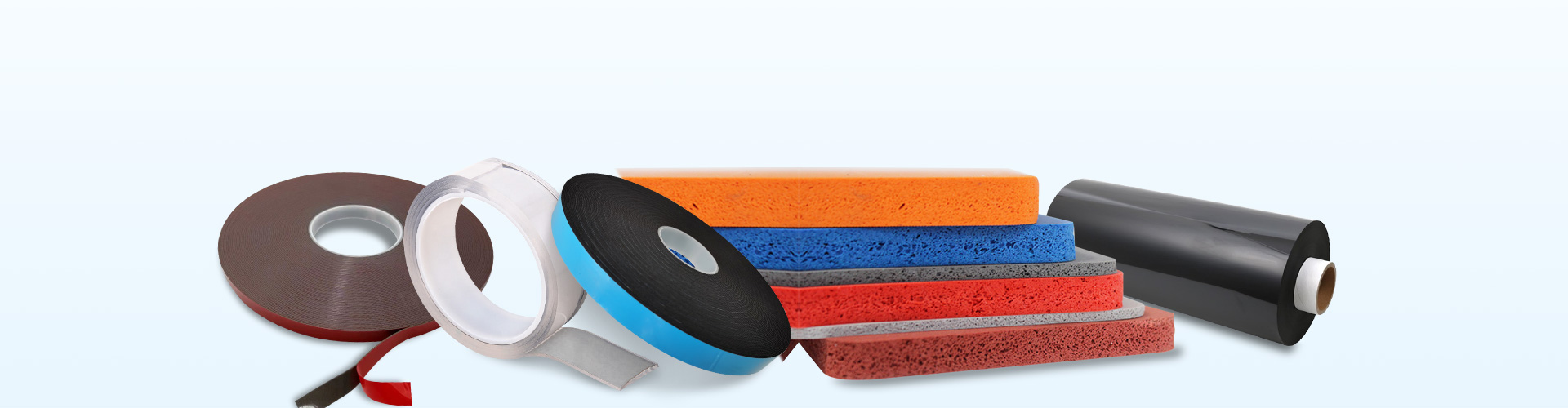
Silicone foam sheets
Silicone sponge rubber rolls
Silicone foam strips
Custom-cut silicone foam pads
Die-cut silicone foam gaskets
Silicone foam differs from conventional foam materials in its base material and performance characteristics.
For example, polyurethane and polyethylene foams are commonly selected for general cushioning and packaging, while silicone foam is often considered for applications requiring greater temperature resistance and long-term material flexibility.
Its performance makes it a useful material for industrial environments where ordinary foam materials may not meet the required operating conditions.
One of the major advantages of silicone foam rubber is its temperature resistance.
The SF001 silicone foam model offered by GMARK is specified with temperature resistance up to 200°C. This makes it a potential choice for applications exposed to elevated temperatures, including electronic components, industrial equipment and automotive assemblies.
Actual temperature performance depends on the operating temperature, exposure duration and application conditions.
Silicone foam has a flexible cellular structure that allows it to compress under pressure and recover its shape after compression.
Its main advantages include:
Good flexibility and resilience
Effective cushioning performance
Adaptability to different component surfaces
Support for sealing and protective applications
Multiple hardness options for different requirements
These characteristics make silicone sponge sheets suitable for components that require consistent cushioning and protection.
Density and hardness are two important factors affecting silicone foam performance.
Density influences material weight, structure and compression behavior, while hardness affects how easily the foam compresses under pressure.
GMARK SF001 silicone foam offers the following options:
Hardness: 30 / 40 / 50 / 60 Shore
Density: 0.4–0.85 (please confirm the specific density unit and grade)
Available colors: Red, Grey, Black, White and Orange
Selecting the appropriate combination helps ensure that the silicone foam meets the functional requirements of your application.
Silicone foam is used in various automotive components where cushioning, sealing and protection are required.
Typical applications include:
Protective cushioning components
Vibration-reduction pads
Sealing gaskets
Interior component protection
Thermal protection components
Its flexibility and temperature resistance make it a useful material for automotive applications with demanding operating conditions.
Electronic equipment often requires materials that provide cushioning, sealing and insulation-related functions.
Silicone sponge sheets can be converted into custom-shaped pads and gaskets for applications such as:
Electronic equipment protection
Component cushioning
Enclosure sealing
Protective padding
Electrical equipment assemblies
The appropriate material should be selected according to the required electrical, thermal and mechanical specifications.
Yes. Silicone foam can be used in industrial machinery for protective cushioning, sealing and equipment padding.
Its smooth surface and uniform cell structure can also make certain grades suitable for selected precision equipment applications.
For cleanroom environments, additional factors such as particle generation, outgassing, cleanliness and material compatibility should be evaluated before selecting a specific grade.
The right silicone foam specification depends on how the material will be used.
Before purchasing silicone foam sheets, consider the following:
| Selection Factor | What to Consider |
|---|---|
| Thickness | Available installation space and compression requirements |
| Density | Weight, structure and cushioning performance |
| Hardness | Required compression and support |
| Color | Identification and application requirements |
| Temperature | Actual operating temperature and exposure duration |
| Dimensions | Required sheet size or roll width |
| Cell Structure | Open-cell or closed-cell requirements |
Providing these details to your supplier helps reduce material selection errors and improves application compatibility.
The choice depends on your production process and application.
Silicone foam sheets are suitable for applications requiring flat material, custom cutting or die-cutting.
Silicone foam rolls are useful when continuous material is needed for converting, slitting or further processing.
For manufacturers requiring customized gaskets, sealing pads or protective components, die-cut silicone foam may also be a practical option.
Before confirming a large order, it is recommended to evaluate:
Material thickness and dimensional tolerance.
Density and hardness consistency.
Compression and recovery performance.
Temperature resistance under actual working conditions.
Surface quality and cell structure.
Compatibility with the intended application.
Requesting samples before mass production is a useful way to verify whether the selected silicone foam meets your requirements.
Choosing the right material supplier is important for maintaining consistent product quality and reliable supply.
GMARK focuses on industrial material solutions and customer-specific requirements, providing support throughout product selection, sample evaluation and order processing.
We aim to help customers find practical material solutions for automotive, electronics, machinery and other industrial applications.
Whether you need standard silicone sponge sheets or customized silicone foam components, GMARK welcomes your inquiries.
Contact GMARK today to discuss your silicone foam requirements and request a quotation.
Silicone foam sheet is commonly used for cushioning, sealing, insulation-related applications, vibration reduction and protective components in automotive, electronic and industrial equipment.
Yes. Silicone foam is known for its temperature resistance. The GMARK SF001 model is specified for temperatures up to 200°C. Actual performance should be verified according to the operating conditions.
Both terms are commonly used to describe cellular silicone rubber materials. Their specific properties depend on the foaming process, cell structure, density and hardness.
Yes. Silicone foam is a flexible material with good resilience. It can compress under pressure and recover its shape, depending on its density, hardness and formulation.
The GMARK SF001 model offers 30, 40, 50 and 60 Shore hardness options. The exact Shore scale should be confirmed according to the selected grade.
Common available colors include red, grey, black, white and orange. Custom color requirements can also be discussed.
Yes. Silicone foam sheets can be customized according to thickness, dimensions, density, hardness and color requirements. Custom cutting and die-cutting can also be discussed.
Yes. Silicone foam can be used in automotive cushioning, sealing, vibration reduction and protective components, subject to the required technical specifications.
Yes. It is suitable for various electronic equipment applications requiring cushioning, sealing and protective padding. Material selection should consider the specific electrical and thermal requirements.
To receive an accurate quotation, please provide the following information:
Required thickness
Length and width
Density and hardness
Preferred color
Application
Estimated order quantity
You can also share a drawing, sample or product photograph with our team for evaluation.
Looking for a reliable silicone foam sheet solution? Contact GMARK to discuss your project and receive professional product support.
Contact me for more details and to get a free sample.


Email : admin@gmarkcn.com
Skype : +86-17803901720,86+13100396144
No.7 Liyuan Road, Xuzhen Zone, Zhangmutou Town, Dongguan City, Guangdong, China