-
Tel : 86+19526646869
-
Email : admin@gmarkcn.com
-
Skype : +86-17803901720,86+13100396144


Tel : 86+19526646869
Email : admin@gmarkcn.com
Skype : +86-17803901720,86+13100396144
Learn how to distinguish high-quality acrylic foam tape from inferior recycled-material tape through appearance, adhesive performance, foam structure, and testing.
Acrylic foam tape is widely used in automotive trim, signs, decorative panels, electronics, appliances, construction, and industrial assembly. With strong adhesion, flexibility, weather resistance, and excellent conformability, it can replace traditional mechanical fasteners in many applications.
However, not all acrylic foam tapes offer the same performance. Some low-cost products may use inconsistent raw materials, excessive recycled content, unstable adhesive formulations, or low-quality foam substrates. They may look similar to high-quality tape when first received, but performance problems can appear after application.
So, how can buyers distinguish high-quality acrylic foam tape from inferior products?In this article, we will explain several practical methods for evaluating acrylic foam tape before making a purchasing decision.
Appearance is the first thing you can check, although it should not be the only evaluation method.
High-quality acrylic foam tape should generally have:
The foam should look relatively uniform rather than showing obvious differences in density or structure. If the tape has large color variations, irregular edges, excessive wrinkles, or visible impurities, it may indicate problems with the raw materials or manufacturing process.
Not necessarily. Color alone cannot reliably determine whether a tape contains recycled material. Different acrylic foam formulations, pigments, adhesive systems, and production processes can produce different appearances. Therefore, appearance should be used as an initial screening method rather than definitive proof of material quality.
The foam carrier plays an important role in the overall performance of acrylic foam tape.
A high-quality foam layer should provide good:
If the foam is too brittle, too soft, or structurally inconsistent, the tape may have difficulty maintaining a reliable bond under vibration, impact, or temperature changes. For applications involving curved or uneven surfaces, foam flexibility is particularly important.
Inferior materials may result in:
These problems may not always be visible immediately. Some can only be discovered during actual application or environmental testing.
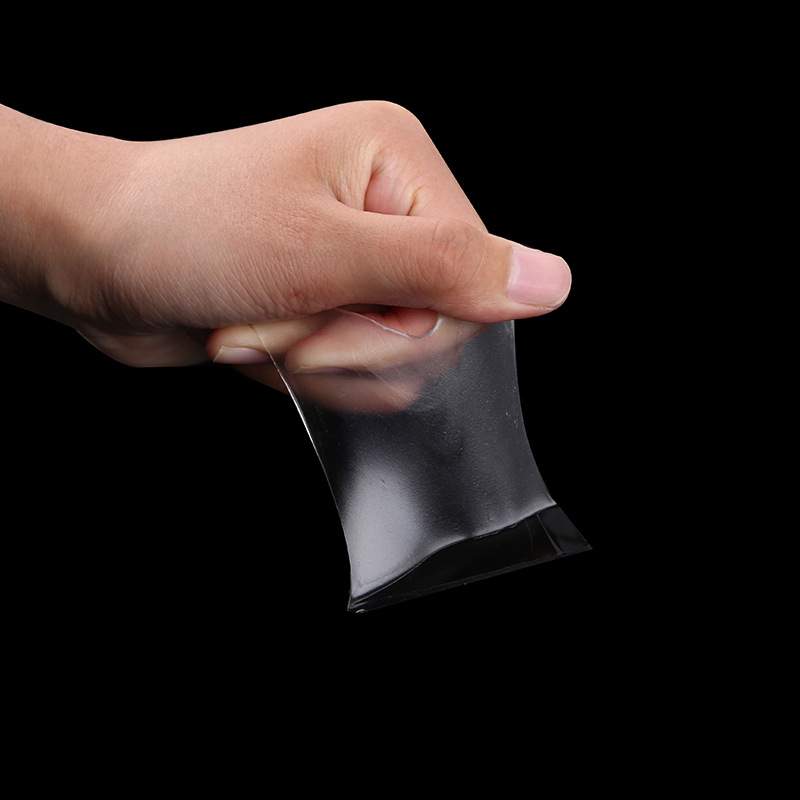
A simple manual stretch test can provide some useful information about flexibility and foam behavior. However, it is not enough to determine overall tape quality. Professional evaluation should also consider tensile strength, elongation, peel adhesion, shear strength, temperature resistance, and aging performance.
Not necessarily. Some tapes may feel extremely sticky when first touched but perform poorly after long-term bonding. Acrylic foam tape should be evaluated based on both initial adhesion and long-term performance.
Important properties include:
A high-quality tape should provide a stable balance rather than relying only on strong initial stickiness.
Before purchasing a large quantity, you can conduct a basic comparison test.
For more accurate evaluation, professional testing equipment should be used under controlled conditions. For example, peel adhesion can be tested according to relevant industry standards such as ASTM D3330, while shear performance can be evaluated using appropriate standardized methods.
Acrylic foam tape may be exposed to significant temperature fluctuations during transportation and actual use. For example, automotive components and outdoor signs can experience: Low temperature → Normal temperature → High temperature → Cooling
A tape that performs well at room temperature may not necessarily maintain its performance after repeated temperature changes. High-quality acrylic foam tape should be selected according to the required operating environment and tested under realistic conditions.
Inferior tape may show:
These problems are especially important for applications requiring long-term outdoor use. Therefore, accelerated aging and temperature-cycle testing can provide much more useful information than simply checking the appearance of a new roll.
No. Acrylic foam tape is a functional industrial material, and its cost is influenced by the foam substrate, adhesive formulation, raw materials, coating process, production controls, testing, and packaging. An unusually low price may be attractive initially, but if the tape fails after assembly, the actual cost can become much higher due to:
For critical applications, consistent quality is usually more valuable than the lowest unit price.
Before placing a bulk order, consider asking the supplier for:
You can also ask whether the supplier has an internal quality-control or testing process.
For important industrial applications, sample testing is highly recommended. Instead of judging a supplier only by price or appearance, test the tape on your actual substrate and under your actual working conditions.
This is especially important when the tape will be used for:
| Evaluation Item | High-Quality Tape | Potentially Inferior Tape |
|---|---|---|
| Foam structure | Uniform and consistent | Uneven or inconsistent |
| Thickness | Stable tolerance | Significant variation |
| Surface | Smooth and clean | Wrinkles, particles or defects |
| Adhesion | Stable and predictable | Strong initial tack but unstable |
| Cohesion | Good internal strength | May split or separate |
| Aging | Stable long-term performance | Edge lifting or residue |
| Production consistency | Batch-to-batch consistency | Large variations |
| Documentation | TDS/test data available | Limited technical information |
Note: The table above is a practical screening guide. Appearance or a single test cannot conclusively determine whether a product contains recycled material. The most reliable approach is to evaluate the tape's actual material composition, technical data, production consistency, and performance testing.
WeChat WhatsApp


Tel: +86 13100396144 | Contact: Mrs Diana Zhou
E-mail: sales9@gmarktape.com
Contact me for more details and to get a free sample.
Email : admin@gmarkcn.com
Skype : +86-17803901720,86+13100396144
No.7 Liyuan Road, Xuzhen Zone, Zhangmutou Town, Dongguan City, Guangdong, China